
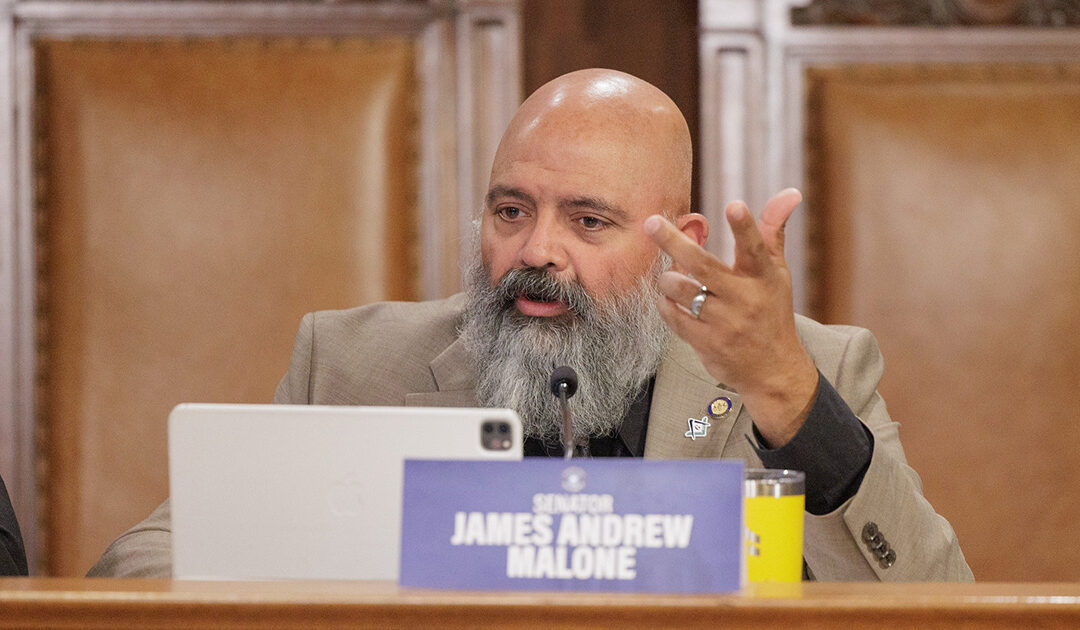
HARRISBURG, PA − October 6, 2026 − Senate Democratic Policy Committee Chair Nick Miller (D-14) hosted a policy hearing on addressing today’s challenges in agriculture and farming, alongside co-hosts Senator Judy Schwank (D-11) and Senator James Malone (D-36). This hearing examined current state-level tools and supports while identifying forward‑looking policy solutions. As stakeholders face challenges like workforce impacts, disease management, severe weather, and rising input costs, the Committee heard expert testimony from Secretary Redding and other industry leaders.
“Pennsylvania farmers are facing growing challenges, from rising costs and unpredictable weather to a shrinking pipeline of young farmers,” said Senator Nick Miller. “We must act now to ensure agriculture remains a cornerstone of our Commonwealth. Today’s hearing highlighted important solutions we can consider to provide farmers with the resources they need, support the next generation, and protect Pennsylvania’s agricultural heritage.”
“Today’s hearing was a valuable opportunity to get an understand of what this past year has looked like for Pennsylvania agriculture,” said Senator Judy Schwank. “Every single one of us depends on our farmers and our agriculture sector provide us with the foods and products we need to go about our daily lives. Hearing from farmers and our Secretary Redding about Pennsylvania’s agricultural landscape is always valuable.”
“As someone who grew up farming, supporting the farmers and ag businesses I represent in Lancaster is a top priority for me,” said Senator James Andrew Malone. “Today, we heard from a farm operator in my district, Duane Swanger, that the rising cost of fuel, fertilizer, and seed are some of the biggest challenges our farmers are facing right now. We also heard that low-interest loan opportunities for farmers and support for addressing challenges like the avian influenza have been critical for his family’s farm. I look forward to continuing these critical programs and exploring new ways we can support farmers as they do the important work of feeding our state and nation.”
Secretary Russell Redding, Pennsylvania Department of Agriculture, testified on the state of the agricultural economy and its impact on our farmers and food system.
“Swirling around harvest and fall activities, every farmer is doing math right now, and this year the numbers are harder than they should be,” said Secretary Redding. “While no year is without challenges, the convergence of factors, such as climate disasters, rising prices on critical supplies such as diesel, geopolitical events, federal policy shifts, and market changes over the past several years have created a tremendously difficult farm economy, which has impacts on the foundations of our food system. But here is what farming has taught me: every time we plant a seed, we are making a bet on a strong harvest and a better tomorrow. In that spirit, today’s conversation is a seed – what we plant here, together, is how we make sure that tomorrow is better for Pennsylvania’s farmers, producers, and families who are counting on us.”
Noah Erwin, the Associate Director for Policy at Pasa Sustainable Agriculture, emphasized the need to help farmers maintain viable businesses and work environments.
“First, making important changes to our farmland preservation program would go a long way in helping to keep farmers farming,” said Erwin. “USDA’s 2022 Census of Agriculture showed that Pennsylvania leads the nation in the percentage of farmers under 35. We should be proud of that and continue to invest in programs that encourage young folks to farm. If we want to keep these folks in farming, however, we must do more to help make long-term land access and security a reality. Buying, or even leasing, land has become all but impossible in some places. An off-farm job for at least one, if not both, adults in the household is necessary to have the cash flow for affording land.”
Erwin also testified that Pennsylvania should also join the 16 other states who allow all workers to apply for a driver’s license.
“Currently, half of workers hired in agriculture do not have immigration status or work permits,” said Erwin. “Providing driver’s license access to all workers in agriculture and food sectors supports farm businesses and our food system and also makes our roads safer. House Bill 1518 is one of the proposals out there, though it has also not received a vote.”
Matt Espenshade, the President of the Pennsylvania State Grange and a seventh-generation dairy farmer from Lancaster County spoke on the future of agriculture.
“For our family, the future of agriculture is not an abstract policy discussion. It is the question of whether the next generation will have a fair opportunity to farm,” said Espenshade. “Pennsylvania agriculture supports more than 48,800 farms, contributes approximately $132.5 billion to the Commonwealth’s economy and supports nearly 600,000 jobs. Those numbers demonstrate agriculture’s strength, but they can hide how financially fragile many individual farms remain. Farmers face volatile commodity prices, severe weather, animal disease, workforce shortages and sharply higher costs for fertilizer, fuel, electricity, feed, equipment and repairs.”
In addition, Espenshade highlighted the impact of Chobani’s decision to invest $1.2 billion in a Pennsylvania facility, a move regarded as one of the most significant opportunities the dairy industry has seen in a generation.
“The project is expected to create more than 900 jobs and, at full scale, source more than three billion pounds of Pennsylvania milk each year – approximately 30 percent of the milk currently produced in the Commonwealth,” said Espenshade. “Production is expected to begin in 2027. That new demand is tremendously encouraging, but milk production cannot be expanded with the flip of a switch. Growing a herd requires cows, feed, land, barns, manure storage, financing, permits and trained workers. Farmers will need dependable market signals and sufficient time to make responsible decisions. Public policy should help farms grow carefully and profitably, not pressure them into expansion without secure contracts or sound business plans.”
Testifiers for the hearing included:
- Pennsylvania Department of Agriculture
- Pasa Sustainable Agriculture
- Penn Ag Industries
- Pennsylvania State Grange Office
- Duane Swanger, Farm owner and operator from Conoy Township
Senator Nick Miller was elected Policy Chair of the Senate Democratic Caucus in December 2024.
Footage of the hearing, as well as the written testimony of the panel, is available at PASenatorMiller.com/Policy. Photographs and downloadable videos are available upon request.
Learn more about the PA Senate Democrats commitment to protecting our commonwealth’s needs and other legislative priorities at www.pasenate.com.
####
Testimony
- Secretary Russell Redding, Pennsylvania Department of Agriculture
- Duane Swanger, Farm owner and operator, Conoy Township
- Noah Erwin, Associate Director for Policy, PASA Sustainable Agriculture
- Christian Herr, President, PennAg Industries Association
- Matthew Espenshade, President, Pennsylvania State Grange National Grange Conservation Committee Chair; and Co-Owner, Evergreen Valley Farm
- Emily O’Brien, Government Affairs Associate, Pennsylvania Farm Bureau
- Kay Johnson Smith, Executive Director, State Agriculture and Rural Leaders (SARL) – virtually